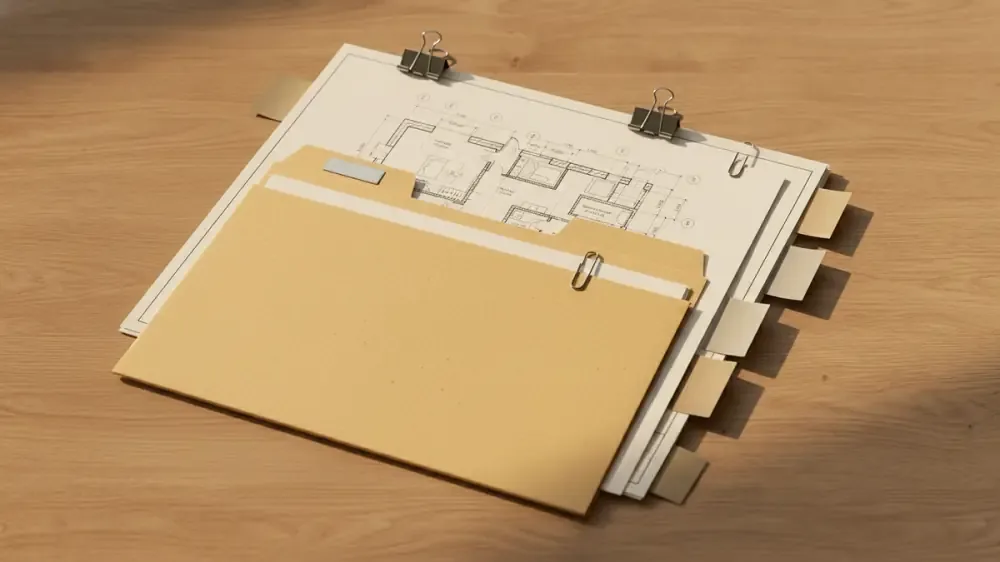
Organise RFQ drawings, PDFs, CAD files, images, and spreadsheets before estimating using folder conventions, revision control, and evidence tracking that keeps scope visible.
How should RFQ
Organise RFQ files by preserving the original customer package, creating a clean Working folder for the current priced set, moving superseded drawings out of the active path, and maintaining a file register that records document type, revision, source, status, and pricing relevance. The estimator should start with one controlled baseline, not a mixed folder of downloads, emails, and old exports.
A simple structure such as Source RFQ, Working, Clarifications, Snapshots, Issued, and Superseded gives the team a shared language for file control. For the review decisions that happen after files are organised, see how to review RFQ files before quoting.
File organisation matters even more in the current AI funding landscape. 18.8 billion went into CAM, ERP, and compliance AI in 2026, but no AI funding solved the intake problem. ERP AI agents cannot read the RFQ email or organise the drawing set before it reaches the estimator. File organisation is still a human workflow, and getting it right before pricing saves hours and prevents errors that no AI tool currently catches.
File organisation matters before
Disorganised files produce disorganised estimates. When an estimator receives a mixed folder of PDFs, CAD exports, images, and emails without a clear file register, the first step should be to organise the set before pricing. An estimator who skips organisation and jumps straight into takeoff risks missing scope boundaries, pricing from wrong revisions, or duplicating work that was already completed in an earlier estimate.
A repeatable organisation system means the estimator knows where to find the latest revision, which files are superseded, and where clarifications are logged. It also means another team member can pick up the RFQ without spending an hour reconstructing the file structure. For shops handling multiple RFQs per week, this consistency saves hours and reduces the risk of pricing errors caused by file confusion.
The time investment to set up a good file structure is minimal about 10 minutes per RFQ to sort, rename, and register files and it pays back every time the estimate needs to be reviewed, revised, or handed off. The habit also supports quote revision control because the team can prove which files were priced in each version.
Folder structure naming convention
Use consistent filenames: ProjectNumber_ProjectName_DocType_Revision_Date.ext. Example: 24187_WarehouseExtension_GA-101_RC.pdf for a GA drawing or 24187_WarehouseExtension_Quote_R02_2026-05-16.pdf for an issued quote. NIST recommends embedding dates in sortable ISO 8601 format and using version numbers to manage drafts and revisions.
Manage revisions, duplicates, CAD
Drawing revisions are the most common cause of file confusion in estimating. When a customer issues an updated drawing, the old version must move to Superseded and the new version must go into Working. Both versions should be logged in the file register with revision letters and dates so the estimator knows which is current and can trace the evolution of the scope.
CAD files often carry dependencies that are easy to miss. A STEP assembly references multiple part files, or a DXF set includes parent and child drawings that must all be present for the model to be complete. If the file register does not track these relationships, the estimator may work with an incomplete model and miss critical components. List all CAD dependencies in the file register and confirm each referenced file is present before estimating starts.
Duplicate files waste time and create risk. If the same drawing appears in the package twice with different filenames, log it and confirm it is the same revision. If it appears with different revision letters, flag it as a conflict that needs clarification before pricing.
Escalation decisions missing unclear
The escalation decision depends on the importance of the missing file to the overall quote. A missing section drawing for a minor component can be handled with an assumption. A missing GA drawing for the primary structure should stop pricing until resolved.
Intake handoff
The handoff from intake to estimating should include the source file register listing every document in the review set, the current revision set in the Working folder, the clarification register with all open and resolved items, and an assumptions log for any scope gaps that could not be resolved before pricing. The estimator should receive one complete package, not a link to a shared drive with mixed versions.
For teams using RFQ management software, this handoff happens in the project workspace where files, assumptions, and clarifications are linked to the estimate. For teams using folders and spreadsheets, the handoff is a deliberate step that should be checked before takeoff begins. The intake coordinator confirms the package is complete, and the estimator confirms receipt before starting quantities.
For the intake process that feeds into this handoff, see the RFQ intake checklist for fabrication teams. For the complete file review workflow, see how to review RFQ files before quoting.
File registers, evidence, quote
A file register is more than an admin list. It is the evidence map for the quote. At minimum, record file name, document title, document type, revision, issue date, status, source, whether it was used for pricing, and any notes. If a reviewer asks why a line item was priced, the estimator should be able to trace that line back to a drawing, spec, schedule, or customer clarification.
For fabrication teams, the file register should also record discipline or work package where possible: structural, architectural, mechanical, electrical interface, coatings, install, transport, or commercial. This makes it easier to assign sections of the RFQ to the right estimator and spot gaps. If the file set includes hundreds of drawings, filtering by package can save significant review time.
Evidence discipline is especially important when a quote is revised. If RevB changes three drawings, the estimate reviewer needs to know which quantities changed and whether old assumptions still hold. A clean register lets the team compare the issued quote against the new revision set instead of re-reading the entire RFQ from scratch.
Weekly housekeeping active RFQ
RFQ folders can drift while the tender is active. Customers send addenda, engineers resend drawings, suppliers return quotes, and estimators create working exports. A weekly housekeeping pass keeps the folder trustworthy. Move old exports out of Working, confirm new customer files are registered, check that supplier quotes are filed under the relevant work package, and make sure the assumptions log still reflects the current active set.
Do not wait until quote review to clean the folder. By that point the team is usually under deadline pressure, and file cleanup competes with pricing decisions. A small housekeeping habit during the RFQ period keeps the quote review focused on scope, risk, and margin rather than document archaeology.
If the RFQ includes unsupported, unreadable, or externally reviewed files, carry those issue states into the handoff. The supported file handling guide explains how to keep skipped files visible instead of losing them in the folder structure.
Ways estimators can keep quote review clear:
- A repeatable folder structure with Source RFQ, Working, Clarifications, Snapshots, Issued, and Superseded keeps files organised and traceable through the estimating lifecycle.
- Use consistent filenames with job number, project name, document type, revision, and date to prevent version confusion across the team.
- Identify CAD file dependencies, duplicate drawings, and cross-referenced documents before starting takeoff to avoid mid-estimate surprises.
- Hand off a complete file package including source files, assumptions log, and clarification register so the estimator receives one controlled baseline.