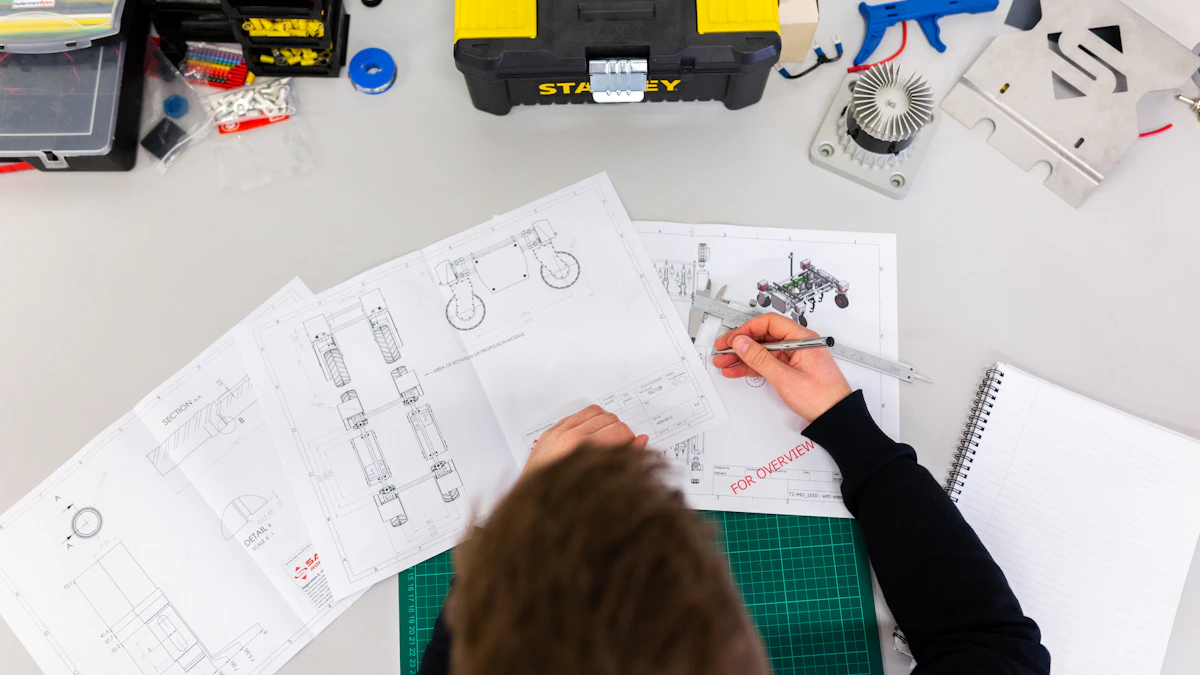
Step by step guide for estimators to audit 2D PDF drawing sheets and capture tight tolerances that standard automatic quote calculators miss.
Title block inspection
B2B trade journalist perspective: Every accurate manufacturing estimate begins with an inspection of the drawing title block. The title block contains the default tolerance limits that apply to all dimensions not specified on the sheet. It defines the baseline accuracy required for the entire part.
Estimators often overlook these default standards, assuming the 3D model contains all necessary data. If the title block specifies a default tolerance of plus-minus 0.1 millimetres, and the part features are modeled to nominal size, the shop must achieve this accuracy. Missing this detail can lead to quoting a precision part as a general tolerance job.
General tolerance defaults
Understanding standard limits: Default tolerances are typically structured by decimal places. For example, a two-decimal dimension might have a tolerance of plus-minus 0.5 millimetres, while a three-decimal dimension requires plus-minus 0.1 millimetres. Estimators must audit every dimension on the PDF print to identify these limits.
If the designer used three decimal places on a non-critical feature, the machining cost will rise unnecessarily. Estimators should identify these issues early and request clarification from the customer. Clarifying tolerances before quoting prevents over-machining and keeps your bids competitive.
Setup time adjustments
Machining adjustments: Tight tolerances require more than just slower cutting speeds. They dictate the type of machine, tooling, and workholding setup needed for the job. A part with a tolerance of plus-minus 0.01 millimetres cannot be run on a worn machine; it requires a high-precision mill.
The operator must spend extra time aligning the fixtures and measuring the first article. This extra setup time must be factored into the hourly rate of the quote. If you fail to adjust the setup hours for tight tolerances, you will lose money on the job. To speed up these evaluations, many shops use limited dimension drawings for estimating.
Precision inspection requirements
Quality control checks: Machining a tight tolerance is only half the battle; the shop must also prove the part meets the spec. Precision tolerances require dedicated inspection equipment, such as coordinate measuring machines (CMM) or custom gauges. This inspection process takes time and requires trained quality control staff.
Estimators must check the drawing for specific inspection notes. If the customer requires a full CMM report for every part, the cost of programming and running the CMM must be added to the quote. Ignoring these quality control requirements can lead to unexpected labor costs.
Local drawing audits
Information security: Auditing drawing sheets for tolerances requires opening and analyzing sensitive PDF files. For defence and high-tech industries, uploading these drawings to a cloud platform is a major security risk. Local-first software allows you to view files and extract tolerance callouts on your desktop.
Local processing ensures that your data remains under your control. It eliminates the latency of cloud viewers and keeps proprietary customer designs secure. Security compliance is a critical requirement for winning defence tenders.
Estimating helper tools
Automation benefits: Finding tight tolerances manually on a multi-page drawing is time-consuming. Modern estimating tools can parse the PDF text and highlight dimensions that require high accuracy. This helps the estimator focus on the critical areas of the part.
By automating the reading process, estimators can complete quotes faster and reduce the risk of missing a tight tolerance. The software extracts the data, but the estimator applies the shop floor judgment. This combination is the most reliable way to quote complex parts.
Revision level validation
Revision tracking: When quoting tolerance updates, estimators must ensure they are referencing the latest drawing revision. A customer might update a tolerance from plus-minus 0.1 to plus-minus 0.02 millimetres in a revision block change. Estimators should check the drawing revision quote update checklist to verify they have the correct iteration.
Quoting an obsolete revision means pricing the wrong accuracy level. This leads to disputes when the finished parts are rejected during inspection. Always verify the revision letters match on all files.
Batch cost amortisation
Batch size impact: The cost of achieving and verifying tight tolerances varies with the batch quantity. For a prototype run of five parts, the setup and inspection costs dominate the total price. For a production run of five hundred parts, these costs are amortized over a larger volume, reducing the cost per unit.
Estimators must structure their cost builds to separate setup hours from run times. This allows the shop to quote different quantities accurately without under-pricing the initial setup. A structured database helps maintain these calculations across all quotes.
Ways estimators can keep quote review clear:
- Locate the drawing title block first to check the default general tolerance standards.
- Flag any specific feature tolerances tighter than plus-minus 0.1 millimetres for special setup pricing.
- Amortise the cost of precision inspection tools across the entire batch quantity.
- Audit drawing notes using local tools to keep proprietary data off third-party servers.