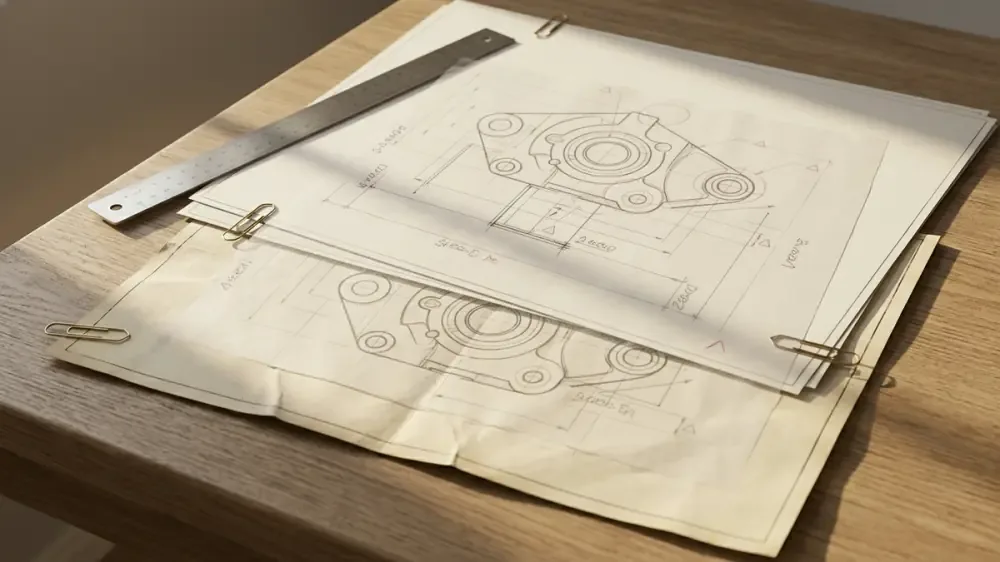
Keep the original quote as a frozen baseline, compare every revision request against it, document the delta in change notes, and issue controlled revised packages.
How do you
Handle quote revisions by freezing the last issued quote as the baseline, saving the estimate files and assumptions behind it, comparing the new request against that baseline, writing a change note, and issuing a controlled revised package. Never overwrite the original quote. Before award, issue a revised quote. After award, use the agreed variation or change order process.
The goal is to keep the customer, estimator, and reviewer aligned on three things: what the original scope included, what changed, and which version is now current. For drawing-specific delta review, use the drawing revision quote update checklist.
Quote revisions workflow preserves
A workable quote-revision process does four things: preserve the old version, explain the delta, control the new version, and make later review easy. Start by freezing the baseline: save the issued quote PDF, cost sheet, assumptions, and linked RFQ files. Capture the trigger document that caused the revision.
Classify the change as clerical, clarification-only, scope-affecting, or post-award. Assess commercial impact on price, lead time, procurement, and certifications. Draft a change note explaining what changed and what did not. Issue a new revision without overwriting the original. Update the revision log.
If you cannot show a third party what changed, why, who approved it, and which file caused it, your revision process needs tightening. Quote revision control is as much about evidence as it is about arithmetic. For the upstream file-control habit this depends on, see how to review RFQ files before quoting.
When update price when
After award, contract variations should follow the contract process, be agreed in writing, and be completed before they take effect.
Revision snapshot change note
A revision snapshot captures: Quote ID, customer, project, current revision, supersedes, trigger document, original scope baseline, changed documents received, commercial change summary, price impact, lead-time impact, assumptions unchanged, assumptions added, exclusions changed, prepared by, reviewed by, approved by, issue timestamp, and archive location.
A change note example: This quote revision supersedes Rev0 dated 15 May. Reason: drawing update S3 RevC and clarification email. Changes: eight added base plates, increased end plate thickness, added shop primer to exposed members. No change to galvanising exclusion or site installation exclusion. Lead time revised from 15 to 18 working days.
For managing assumptions through revisions, see estimating assumptions visible before quote review. For pricing uncertain revision effects, see pricing risk in quotes without hiding it.
Audit trail, pdfs, automation
Archive final issued versions as fixed PDFs with native working files kept behind them. PDF/A helps long-term preservation, while digital signatures can authenticate the signer and help verify document integrity. Even without formal signing, each issued package should be saved as a dated record that cannot be confused with a working draft.
Automation helps with title-block extraction, file grouping, revision comparison, and draft change notes. It should not decide whether a revised detail changes weld prep time or whether a post-award drawing issue is a repriced quote or contract variation. That decision needs estimator and commercial review because it affects price, schedule, and contractual responsibility.
Keep automation outputs traceable. If a tool drafts a change note, the reviewer should still see which file, drawing, page, or customer instruction caused the change. This mirrors the evidence discipline described in how to organise RFQ files before estimating.
Revision workflow
Before award, a revision usually stays inside the quote process. The estimator freezes the old quote, reviews the new scope, updates the estimate, writes a change note, and issues a revised quote that clearly supersedes the earlier version. The customer can then compare the revised offer against the previous scope.
After award, the same change is no longer just a quote revision. It may be a variation or change order depending on the contract and purchase order terms. The team should not silently edit the original quote or absorb the change into production. Record the customer instruction, assess price and programme impact, and use the agreed variation process before proceeding. For the pricing treatment behind uncertain deltas, use pricing risk in quotes.
File naming
Use filenames that sort cleanly and show the revision relationship: Q-10427_ProjectName_Quote_Rev0_2026-05-15.pdf, Q-10427_ProjectName_Quote_Rev1_2026-05-19.pdf, and Q-10427_ProjectName_ChangeNote_Rev1_2026-05-19.pdf. Keep superseded PDFs in the project record rather than deleting them.
The handoff from estimator to reviewer should include the previous issued quote, revised quote draft, revision register, changed drawings, change note, and any customer approval or clarification. The reviewer should not need to search email to understand why the quote changed.
Worked examples quote revision
Pre-award drawing update: a customer sends RevC drawings before the quote is accepted. The estimator freezes Rev0, compares the changed drawings, updates material and labour, writes a change note, and issues Rev1. The email states that Rev1 supersedes Rev0, so there is only one current offer.
Post-award production change: a drawing revision arrives after a purchase order and material release. The estimator does not overwrite the accepted quote. The team logs the instruction, assesses rework, material, and schedule impact, then prepares a variation or change order for approval before proceeding.
Clarification-only revision: the customer confirms that site installation is excluded and supply-only scope is correct. The estimator updates the clarification log and may reissue the quote for clarity, but records no price change because the commercial basis did not move.
Sources further reading quote
The practical standard is simple: every issued quote revision should be understandable without asking the estimator to reconstruct history from memory.
Ways estimators can keep quote review clear:
- Freeze the last issued quote as a baseline before editing. Save the PDF, estimating file, assumptions, and clarifications into a dated snapshot.
- Use a revision checklist: baseline freeze, trigger capture, scope comparison, change classification, commercial impact, change note, new revision issue, log update.
- Before award issue a revised quote. After award use a variation or change order through the contract process.
- Use consistent filenames with dates and version numbers. Archive each revision as a fixed PDF and keep the native file and approval trail.